Reading the Book of Acts: What's Description and What's Command
Acts tells us what the early church did, but not everything it did is a command. A calm, practical method for reading the narrative and applying it well.
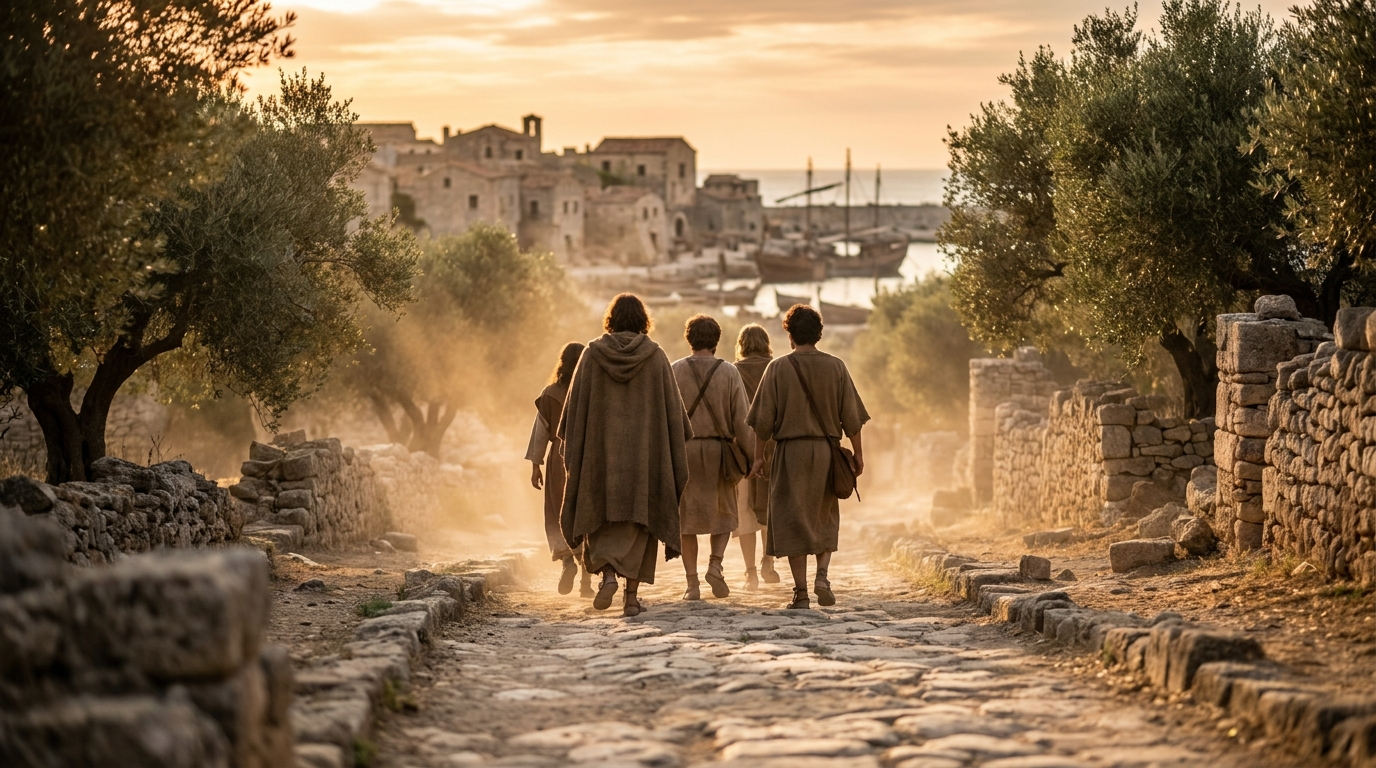
Few books of the Bible get quoted in more arguments than Acts. Church budgets, worship styles, leadership structures, and expectations about the Holy Spirit all get defended with a verse from Luke's second volume. And that is understandable. Acts is the only sustained account we have of what the earliest Christians actually did.
But a question sits underneath almost every one of those debates, and it is rarely asked out loud: when Luke tells us what happened, is he telling us what must always happen? Learning to answer that question carefully is one of the most valuable skills a reader of Scripture can develop, and Acts is the best place to practice it.
Luke Wrote History, and He Wrote It on Purpose
Acts is the second half of a two-part work. Luke opens his Gospel by telling Theophilus that he has carefully investigated everything from the beginning in order to write an orderly account. Acts picks up that same thread and follows the gospel from a room in Jerusalem to a rented house in Rome.
That means Acts is narrative. And narrative, throughout Scripture, reports far more than it endorses. Genesis records Jacob deceiving his father without praising the deception. Judges tells us plainly what happened when everyone did what was right in his own eyes. The presence of an event in the biblical record does not, by itself, make that event a command.
But the opposite mistake is just as costly. Narrative is not doctrinally empty. Luke chose what to include and what to leave out. He repeats certain themes, summarizes progress at key moments, and shapes his account so that we see the pattern he wants us to see. Acts is teaching us. The work is figuring out what, exactly, it is teaching.
The Passage That Raises the Question
Consider the summary at the end of Acts 2, immediately after Pentecost:
They continued steadfastly in the apostles' teaching and fellowship, in the breaking of bread, and prayer. Fear came on every soul, and many wonders and signs were done through the apostles. All who believed were together, and had all things in common. They sold their possessions and goods, and distributed them to all, according as anyone had need. Day by day, continuing steadfastly with one accord in the temple, and breaking bread at home, they took their food with gladness and singleness of heart, praising God, and having favor with all the people. The Lord added to the assembly day by day those who were being saved.
— Acts 2:42–47 (WEB)
Read that passage in a room full of Christians and you will get two reactions. Some hear a permanent blueprint: sell what you own, hold everything in common, meet daily. Others hear a description of a remarkable and particular moment that was never meant to be replicated procedure by procedure. Both groups are reading the same words. The difference is not sincerity. It is method.
Four Questions to Ask of Any Scene in Acts
Instead of arguing from impressions, ask the text a consistent set of questions. These four will carry you through most of the book.
1. Is this reported, commanded, or evaluated?
Look for the narrator's own comment and for apostolic instruction attached to the event. When Luke tells us the believers devoted themselves to the apostles' teaching, he is describing a practice he clearly commends. When he tells us Paul's ship ran aground, he is simply telling us what happened. Most passages sit somewhere in between, and the surrounding verses usually tip the scale.
2. Does it repeat?
A single occurrence is a data point. A pattern is an argument. Teaching, prayer, shared meals, and generosity recur across Acts in different cities under different leaders. By contrast, the way the Spirit comes upon new believers varies noticeably between Acts 2, Acts 8, Acts 10, and Acts 19. Variation within the book itself is a strong signal that Luke is not handing us a fixed procedure.
3. Is this tied to a unique moment in redemptive history?
Acts records thresholds that could only be crossed once: the outpouring at Pentecost, the gospel reaching Samaritans, the household of Cornelius opening the door to the Gentiles, the council at Jerusalem settling the terms of that inclusion. Events that mark a turning point in salvation history function differently from events that show routine congregational life.
4. Does the rest of Scripture confirm it as normative?
The letters were written to churches doing the very things Acts describes, and they frequently tell us how to evaluate those practices. When a pattern in Acts is reinforced by direct instruction in the epistles, you are standing on solid ground. When it appears once in a narrative and nowhere else in Scripture, humility is the better posture.
Working the Example: Acts 2 and Shared Possessions
Run the four questions on the sharing of goods in Acts 2:44–45.
Reported or commanded? Luke reports it, and he clearly admires it. No one in the passage issues a command to sell property.
Does it repeat? Yes. A nearly identical summary appears in Acts 4:32–35. So the generosity is not a one-off.
Unique moment? Partly. Thousands of pilgrims had come to Jerusalem for the feast and stayed after believing. The need was extraordinary and immediate.
Confirmed elsewhere? Here the text does its own work. In Acts 5, Peter tells Ananias that the land remained his own before he sold it, and the proceeds were in his own control afterward. The sin was deception, not withholding. That single sentence tells us the sharing was voluntary and that private ownership had not been abolished. Paul's collection for Jerusalem in 2 Corinthians 8 and 9 makes the same case: give generously, give willingly, give in proportion to what you have.
The conclusion is not that Acts 2 is irrelevant. It is that the generosity is normative and the mechanism is not mandated. That is a more demanding reading than either extreme, because it removes the excuse of saying the passage does not apply while also removing the false comfort of thinking obedience is a one-time transaction.
Where Faithful Traditions Read Acts Differently
Some questions in Acts are settled by careful method. Others are exactly where sincere Christian traditions have long differed: the relationship between baptism and the reception of the Spirit, the continuation of particular gifts, the shape of church leadership, the role of elders and deacons. Those differences are not sloppiness. They are considered positions worked out over centuries within particular confessional commitments.
This is one reason a generic answer is rarely useful on these passages. A study tool that flattens every tradition into a bland average will not serve you well when the question is genuinely contested. Gabriel was built the other way around: at www.gabrielchurchai.com, responses are shaped by the theological tradition you identify, so you are studying inside your own framework rather than being nudged toward someone else's. Scripture remains the authority. The tool simply keeps the conversation honest to where you already stand.
A Four-Week Rhythm for Reading Acts Well
Acts rewards reading in large sections. The book announces its own outline in Acts 1:8 and then follows it geographically.
Week one: Acts 1–7, Jerusalem. The Spirit comes, the church forms, and the first opposition arrives. Track how the apostles preach; notice how often they explain events by quoting the Old Testament.
Week two: Acts 8–12, Judea and Samaria. The gospel crosses ethnic and religious boundaries. Pay attention to who initiates each expansion.
Week three: Acts 13–20, the missionary journeys. Watch Paul adapt his approach between synagogue and marketplace while the content of his message stays fixed.
Week four: Acts 21–28, to Rome. Read the trials slowly. Luke gives more space to Paul's defenses than to his miracles, which tells you something about his priorities.
One practice ties all four weeks together: mark the short progress reports scattered through the book at 6:7, 9:31, 12:24, 16:5, 19:20, and the final verse of chapter 28. Read those six statements in a row and you have Luke's own summary of what he thinks the story is about. It is not about a technique. It is about the word of God spreading and multiplying.
Studying Without Losing Your Place
The practical difficulty with this kind of reading is that the questions arrive while you are mid-passage, and answering them usually means leaving the text. You open a search tab, find three conflicting opinions, and twenty minutes later you have lost the thread of the chapter.
That is the friction Gabriel was designed to remove. Reading Acts 2 and wondering how the phrase about breaking bread is used elsewhere, you can ask about that verse without leaving it, then keep reading. Comparing how several translations render a difficult clause in Acts 15 takes seconds rather than a stack of open books. And the notes you make in week one are still there in week four, so your study accumulates instead of restarting. You can see how that works at www.gabrielchurchai.com.
If you are leading others through Acts, the same study can become the outline you hand your group, with discussion questions drawn from the passages you actually worked through rather than a generic template. Building that from your own notes at www.gabrielchurchai.com takes minutes, and it keeps your teaching anchored to the text in front of you.
Start Reading Acts With Fresh Eyes
Acts is not a rulebook, and it is not a scrapbook. It is a carefully written account of what God did through ordinary people when the gospel began to move, and it asks to be read with the same care it was written with. Ask the four questions. Read in large sections. Let the letters interpret the narrative. And hold your conclusions with the confidence the text actually warrants.
Start a free trial at www.gabrielchurchai.com and work through Acts one section at a time, with study that stays grounded in Scripture and aligned with your tradition.