How to Turn One Book of the Bible Into a Six-Week Youth Curriculum
Skip the boxed kit and the Wednesday scramble. Here is a six-week frame for teaching teenagers one whole book of the Bible, plus how to build it in one sitting.
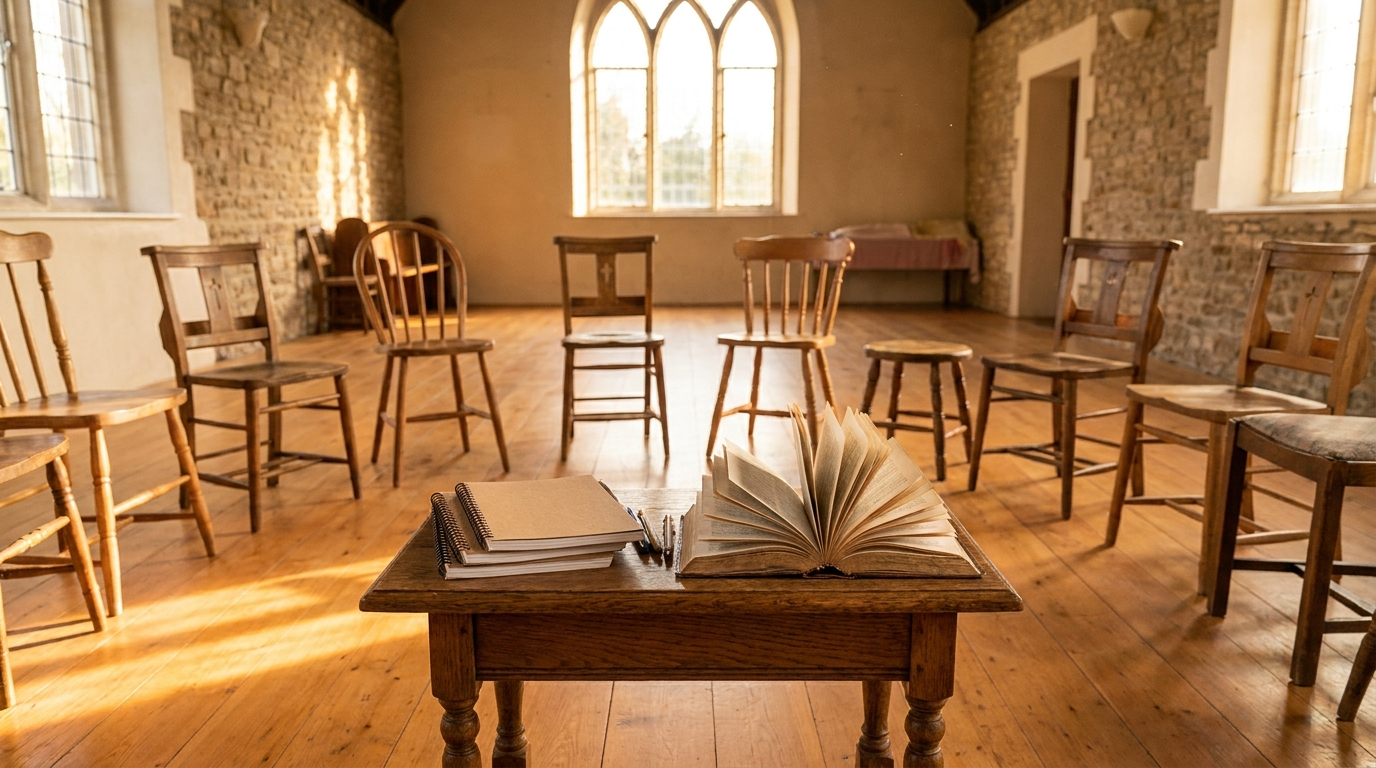
Most youth curriculum falls into one of two categories. There is the boxed kit, professionally produced, arriving with videos and worksheets and a theme that someone else selected for a group they have never met. And there is the Wednesday-afternoon scramble, where a volunteer who works full time picks a passage at four o’clock and hopes something comes together by seven.
Both are understandable. Neither produces what most youth leaders actually want, which is a group of teenagers who can open a book of the Bible, follow its argument, and come out the other side knowing how to do that again on their own.
There is a middle path that costs less time than the scramble and produces more than the kit: take one book of the Bible and build six weeks around it. Not six topics with verses attached. One book, start to finish, in order.
Why One Book Beats a Topical Series
Topical teaching has a hidden cost with young people. It quietly trains them to treat Scripture as a reference index, a place you go to retrieve support for a point already decided. Six weeks of that and a teenager has learned to search the Bible without ever learning to read it.
Working through a single book does the opposite. It puts students inside an argument that develops. They see a writer set up a problem in chapter one and resolve it in chapter four. They encounter passages that were not selected because they were comfortable, because the book contains what the book contains. And crucially, they finish something. For a teenager who has never read a book of the Bible all the way through, that completion carries real weight.
It also solves a practical problem. When the text is chosen in advance for all six weeks, nobody is picking a passage at four o’clock. The prep question changes from what should we do this week to how do I teach this well, which is a far better question and a much faster one to answer.
Choosing the Right Book
Not every book works for a six-week run with students. Four criteria narrow it quickly.
Short enough to finish. You want to cover the whole thing, not a fragment. That generally means something under six chapters, or a narrative you can move through in large sections.
A clear shape. Books with visible structure give students something to hold onto. If you can sketch the outline on a whiteboard in thirty seconds, it will teach well.
Concrete rather than abstract. Narrative and vivid imagery land better with teenagers than sustained abstract argument. This is not about lowering the ceiling; it is about picking the door.
It raises real questions. You want a book that provokes something. If nobody has a question by week two, the group will drift.
Books that consistently work: Jonah, for a group that assumes the Bible is predictable. Ruth, for teaching how a story can be told with restraint and still be devastating. Philippians, for a letter written under pressure that keeps returning to joy. James, for students who want to know what faith looks like on a Tuesday. Mark, if you have longer than six weeks and want the Gospel that moves fastest. First John, for a group wrestling with assurance.
The Six-Week Frame
Whatever book you pick, the same architecture works.
Week 1 – Orientation. Who wrote this, to whom, and what problem were they addressing? Read the first section together. Give students the outline of the whole book so they know where they are going. Ten minutes of context here saves five weeks of confusion.
Weeks 2 through 4 – The body. Move through the book in order, one section per week. Resist the urge to skip the awkward part. The awkward part is usually where the best discussion lives.
Week 5 – The turn. Nearly every book has a hinge, a place where the argument or the story pivots. Give it a full session. This is the week students remember.
Week 6 – Synthesis and application. Read the ending, then go back to the top. What was this book claiming? What changes if it is true? Have every student state the book’s main point in one sentence, in their own words. That sentence is the deliverable of the whole series.
What Each Session Actually Needs
Five components. If a session has these, it will hold up.
A defined text. Named in advance, read aloud in the room. Not summarized. Read.
One central question. Not five. One question the session exists to answer, stated at the start and returned to at the end.
Ten to fifteen minutes of teaching. Enough to give context and make the passage legible. Less than students expect, which is part of why it works.
Four to six discussion questions. The hard part. Good questions cannot be answered yes or no, do not have an obvious right answer that students are performing for you, and require them to look at the text to respond. “What does this passage tell us about what the writer feared?” will always outperform “Do you think God cares about us?”
Something to carry out the door. One verse, one question, or one small practice for the week. Brief enough to be remembered without a handout.
Building It Without Losing Your Week
Six sessions at that level of detail is genuinely a lot of preparation, and this is where good intentions usually die. A few things make it manageable.
Build all six at once rather than one at a time. Sitting down with the whole book and drafting the arc in a single session takes far less total time than six separate Wednesday scrambles, and the series holds together better because you designed it as one thing.
Draft from the text you have actually studied. If you have already read the book closely and left notes on the passages that struck you, those notes are the raw material for the sessions. Inside Gabriel, working from a book you have marked up means the study guide and discussion questions come out of your own reading rather than a generic template, and they stay aligned with your church’s theological tradition rather than flattening it into a lowest common denominator.
Get the questions written first. Most leaders write teaching notes and then improvise questions, which is backwards. The questions carry the session. Drafting a set for each passage at www.gabrielchurchai.com and then editing them down to the four that fit your specific students is faster than starting from a blank page, and it leaves you room to do the part software cannot do, which is knowing which question your particular group needs.
Share the finished series with your volunteers. If two or three adults help lead, they should have the same material in front of them a week ahead rather than finding out the topic on arrival. A shared set of session guides your whole team can pull from turns a one-person operation into something that survives your vacation.
A Word on Teaching Teenagers Honestly
The instruction in Deuteronomy about passing faith along has a particular texture worth noticing:
“And these words, which I command thee this day, shall be in thine heart: and thou shalt teach them diligently unto thy children, and shalt talk of them when thou sittest in thine house, and when thou walkest by the way, and when thou liest down, and when thou risest up.” (Deuteronomy 6:6–7, KJV)
Notice that it begins with the teacher. The words are in your heart first. And notice the setting: sitting, walking, lying down, rising. This is not a curriculum description. It is a description of ordinary life shot through with conversation about God.
Which is a useful corrective for anyone building a six-week series. The series is scaffolding. What actually forms students is a trusted adult who takes Scripture seriously, answers hard questions without flinching, and admits when something is genuinely difficult. Teenagers have an unerring instrument for detecting an adult who is performing certainty. Say “that is a hard passage and here is why people have disagreed about it” and you will keep them. Pretend it is simple and you will lose them, sometimes for years.
Start With One Book
Pick the book this week. Sketch the six sessions in one sitting. Write the questions before the teaching notes. Then teach it, all the way to the end, and let your students experience finishing something in Scripture.
If you want help turning a book you have studied into session guides and discussion questions your team can share, start a free trial of Gabriel. Scripture is the authority and you are the teacher; the tools just take the blank page out of the way.