How to Read the Book of Nehemiah (And Why It Is About More Than Rebuilding a Wall)
Nehemiah is remembered for a wall, but its center is the Word of God read and understood. Learn the book's structure and how to study it well.
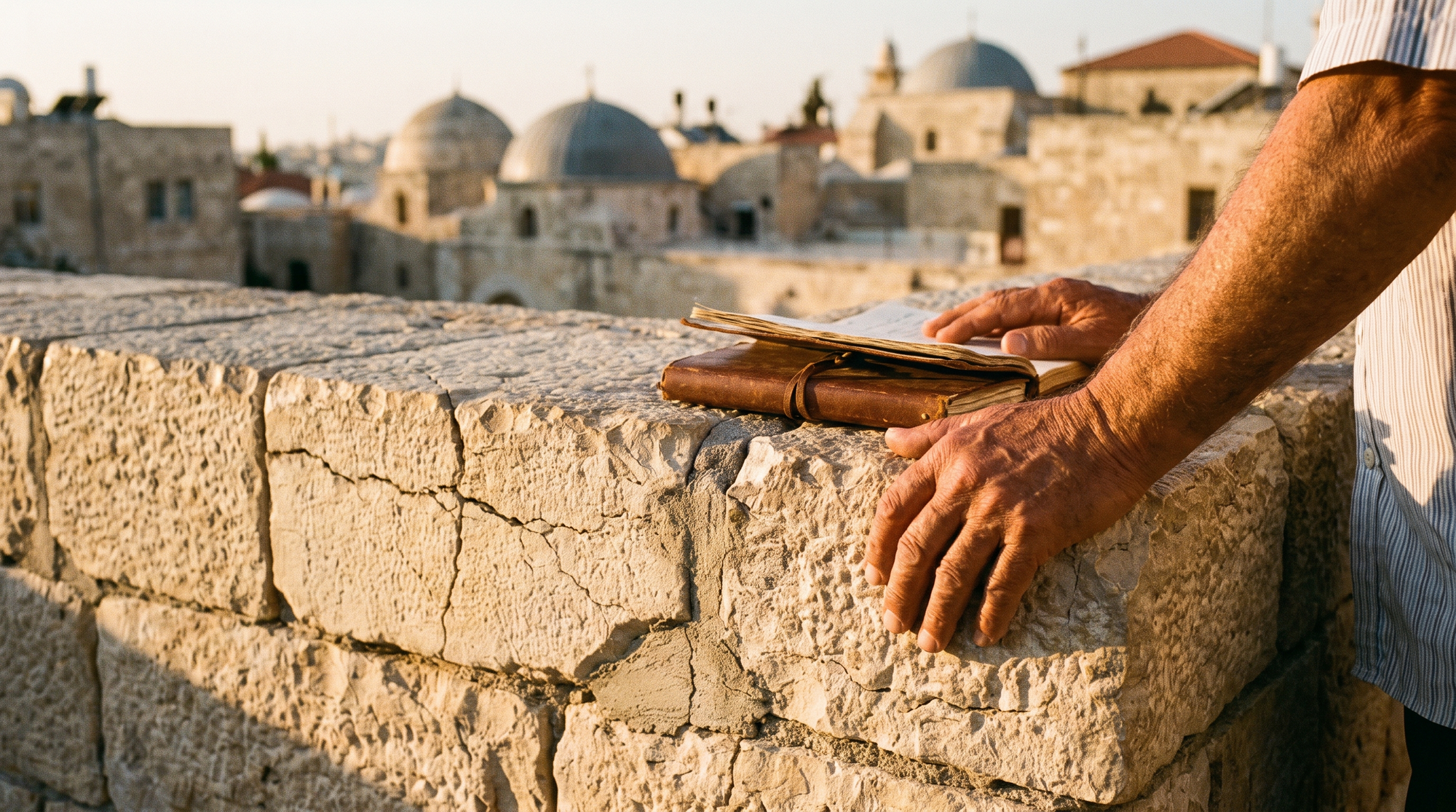
Most people remember Nehemiah for one thing: he rebuilt a wall. That is true, and the wall matters. But if you read the book only as a leadership manual or a construction story, you will miss what it is actually doing. Nehemiah is a book about a people being rebuilt around the Word of God, and the wall is the setting for that story, not the point of it.
This guide will help you read Nehemiah as a whole, follow its structure, and see why the most important chapter is not the one where the wall is finished.
Start With Where Nehemiah Sits in the Story
Nehemiah opens roughly a century after the first exiles returned from Babylon. The temple has already been rebuilt under Zerubbabel. Ezra has already come to teach the law. Yet Jerusalem's walls are still broken down, its gates are burned, and the people living there are, in Nehemiah's words, "in great affliction and reproach" (Nehemiah 1:3, WEB).
That context changes how you read the opening. Nehemiah is not a pioneer arriving at an empty site. He is a Jewish official in the Persian court, far from home, hearing that the restoration everyone hoped for has stalled. His response is not a plan. It is grief, fasting, and prayer:
"When I heard these words, I sat down and wept, and mourned several days; and I fasted and prayed before the God of heaven." (Nehemiah 1:4, WEB)
Notice that four months pass between Nehemiah's prayer in chapter 1 and his conversation with the king in chapter 2. The book does not rush. If you read it in one sitting and treat every chapter as equal, you will flatten a story that is deliberately paced. Nehemiah and Ezra were originally a single book in the Hebrew Bible, so it also helps to read Ezra first, or at least to know its outline, before starting here.
Follow the Three Movements of the Book
Nehemiah has a clear shape, and knowing it keeps you from getting lost in lists of names and gates.
Chapters 1 through 7: Rebuilding the wall. Nehemiah prays, receives permission and provision from King Artaxerxes, surveys the ruins at night, and organizes the people to build. Opposition comes from Sanballat, Tobiah, and Geshem through mockery, threats, and manipulation. Internal trouble surfaces too, as wealthy Jews exploit their poorer neighbors during a famine. The wall is finished in fifty-two days.
Chapters 8 through 10: Rebuilding the people. This is the center of the book. Ezra reads the law aloud to the assembled people. They weep, then celebrate the Feast of Booths, then confess their sins in one of the longest prayers in Scripture, and finally bind themselves in a written covenant to obey God.
Chapters 11 through 13: Rebuilding daily life. The city is repopulated, the wall is dedicated with singing, and worship is reorganized. Then, after Nehemiah returns to Persia and comes back, he finds that nearly everything has slipped: the temple storerooms misused, the Levites unpaid, the Sabbath ignored, and intermarriage with surrounding peoples resumed.
Seeing this shape helps you notice that the wall is done by the end of chapter 6. Half the book remains. Whatever Nehemiah is finally about, it is not merely construction.
Read Chapter 8 as the Hinge
If you only have time to study one passage deeply, make it Nehemiah 8. The wall is complete, the people gather "as one man" in the square by the Water Gate, and they ask Ezra to bring out the book of the law. What follows is one of the clearest pictures of public Scripture reading in the Old Testament:
"They read in the book, in the law of God, distinctly; and they gave the sense, so that they understood the reading." (Nehemiah 8:8, WEB)
Three things happen in that verse. The Word is read. The Word is explained. The people understand. That sequence is the goal of all Bible study, and Nehemiah presents it as the true climax of the rebuilding project. Stones and gates protect a city; the Word of God forms a people.
The people's first response is weeping, because the law exposes how far they have drifted. Nehemiah and Ezra do not let them stay there. "This day is holy to Yahweh your God. Don't mourn, nor weep... for the joy of Yahweh is your strength" (Nehemiah 8:9-10, WEB). Conviction leads to joy, not despair, because the same Word that exposes sin also reveals the God who restores.
When you sit with this chapter, it helps to keep the text and your questions in the same place. Reading Nehemiah 8 on www.gabrielchurchai.com, you can select a verse like 8:8 and ask directly what "gave the sense" would have involved for Levites teaching a Hebrew text to a people who had grown up speaking Aramaic in exile. You get an answer anchored to the verse you are looking at, in line with your own tradition's understanding, without leaving the passage.
Notice the Pattern of Prayer
Nehemiah prays constantly, and the book records it. There is the long prayer of chapter 1, built on God's promises in Deuteronomy. There is the quick, silent prayer in 2:4 when the king asks what he wants. There are the short prayers scattered through the building project: "Remember me, my God" (5:19; 13:14, 22, 31), and "Now therefore, God, strengthen my hands" (6:9).
Tracing this pattern shows you something about the man and about the book. Nehemiah's planning is meticulous, yet he never treats planning as a substitute for dependence. His prayers are also deeply scriptural. In chapter 1 he essentially quotes God's own words back to Him. In chapter 9 the whole nation prays through its history from creation to exile, confessing that "you are just in all that has come on us; for you have dealt truly, but we have done wickedly" (9:33, WEB).
A good exercise is to read every prayer in Nehemiah in one sitting and ask what each one reveals about how he understood God. You will find a consistent picture: God keeps covenant, God hears, and God is worth returning to even after repeated failure.
Do Not Skip the Lists
Chapter 3 names the builders gate by gate. Chapter 7 repeats the genealogy from Ezra 2. Chapters 11 and 12 list who settled where and which priests and Levites served. These chapters tempt readers to skim, but they carry meaning.
Chapter 3 shows that the wall was built by goldsmiths, perfumers, merchants, priests, and rulers, often "opposite their own house." It was a whole community's work, not one leader's achievement. Chapter 7 connects the returned people to their pre-exile identity; they are not a new nation but the continuation of God's covenant people. The lists in 11 and 12 show ordinary faithfulness that would otherwise be forgotten. Reading them slowly, even once, will change how you see the rest of the book.
Read Chapter 13 Honestly
Nehemiah ends on a sober note. The covenant of chapter 10 was signed and sealed, and within a few years it was broken on nearly every point. Nehemiah's final reforms are forceful, and he closes the book with the same plea he has prayed throughout: "Remember me, my God, for good" (13:31, WEB).
Some readers find this ending discouraging. It is better to see it as truthful. Walls can be rebuilt in fifty-two days; hearts cannot. The book leaves you feeling the weight of a people who keep drifting despite every advantage, and that weight is meant to point forward. Nehemiah's reforms could restrain sin but not remove it. The Old Testament ends waiting for something more than a rebuilt city, and the New Testament answers that longing in Christ, who does not only read the law to His people but writes it on their hearts.
A Simple Plan for Studying Nehemiah
Here is a structure that fits the book's shape and can be finished in six weeks.
Week 1: Chapters 1 and 2. Focus on the prayer of chapter 1. Compare it with Deuteronomy 30:1-5, which Nehemiah is clearly drawing on. Ask what it means to pray Scripture back to God.
Week 2: Chapters 3 and 4. Read the list of builders slowly. Then study how Nehemiah handles opposition: prayer and a guard, side by side (4:9).
Week 3: Chapters 5 through 7. Look at the internal crisis of chapter 5. Notice that Nehemiah treats injustice among God's people as seriously as external threats.
Week 4: Chapter 8. Spend the whole week here. Read it in more than one translation; comparing the KJV, ASV, and WEB renderings of verse 8 side by side on www.gabrielchurchai.com is a quick way to see how translators have handled "distinctly" and "gave the sense."
Week 5: Chapters 9 and 10. Read the prayer of chapter 9 aloud. Trace its outline through Israel's history. Then examine the specific commitments of chapter 10.
Week 6: Chapters 11 through 13. Read the dedication of the wall, then the failures of chapter 13. End by asking what the book's ending teaches about the limits of reform and the need for a greater Redeemer.
If you are leading a group through this, building the study plan once and then generating discussion questions for each week from the passages themselves is a good use of the study tools at www.gabrielchurchai.com. It keeps your questions anchored to the text rather than to a theme you brought in from outside, and your notes stay attached to the verses so you can pick up where you left off.
What Nehemiah Is Finally About
Nehemiah is about a God who keeps His promises to a people who keep breaking theirs. It is about the Word of God read, explained, and understood as the center of community life. It is about ordinary people building opposite their own houses, and about a leader who prays before he plans and prays after he finishes. And it is about the honest recognition that no wall, no covenant, and no reformer can finally fix the human heart.
Read it that way and the book becomes far more than a story about a wall. It becomes a picture of what it looks like when Scripture is placed back at the center of a people's life, and a reminder of why that is always the first thing to rebuild.
If you want to work through Nehemiah with the text, your notes, and your questions all in one place, you can start a free trial at www.gabrielchurchai.com and begin with chapter 1 today.