How to Read the Book of Esther (When God Is Never Mentioned by Name)
Esther never names God, yet He is everywhere in it. Learn how to read Esther for providence, reversal, and covenant promise, with practical study steps.
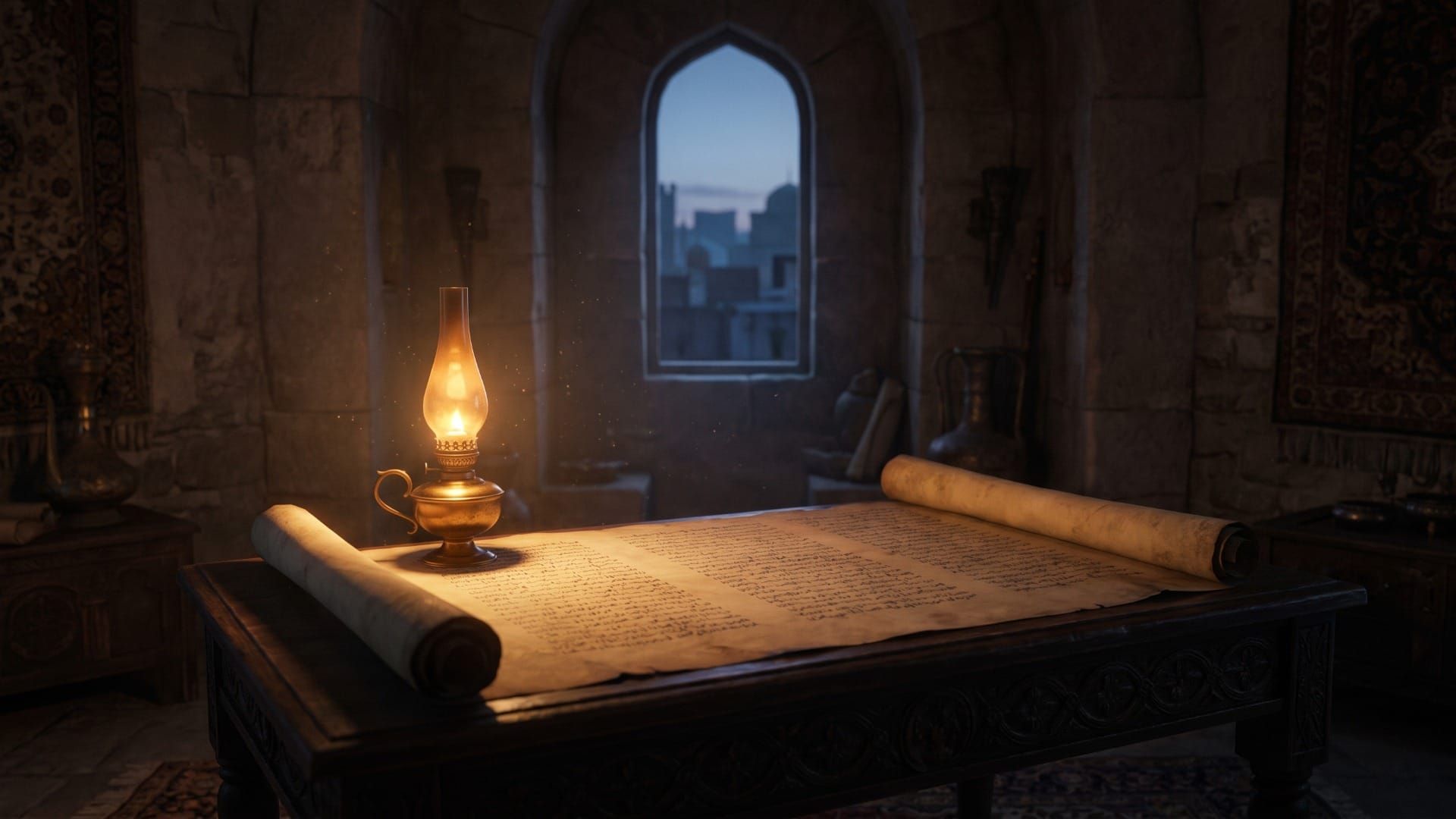
Esther is the only book in the Old Testament that never mentions God. There is no prayer recorded, no reference to the law, no mention of the temple or Jerusalem. For a book that made it into the canon, that is a remarkable silence, and it has unsettled readers for a very long time.
And yet Esther has been read aloud every year for well over two thousand years, and Jewish and Christian readers alike have found in it one of the clearest pictures of God's providence anywhere in Scripture. The silence is not an accident. It is the point. Learning to read Esther well means learning to see God at work when He is not announcing Himself, which is how most of us experience most of our lives.
What the Book of Esther Is About
The story takes place in the Persian Empire, in the royal city of Susa, roughly a century after Jerusalem fell to Babylon. Many Jews had returned to the land under Zerubbabel a generation earlier, but many had not. Esther is the story of those who stayed, living as a minority people under a king who did not know their God.
The plot moves quickly. King Ahasuerus, known in Greek sources as Xerxes, deposes Queen Vashti and searches the empire for a replacement. A young Jewish woman named Hadassah, called Esther, is taken into the palace and crowned queen, while her cousin Mordecai, who raised her, tells her to keep her heritage hidden. A court official named Haman rises to power, is enraged when Mordecai refuses to bow to him, and secures a royal decree to destroy every Jew in the empire on a single day.
Mordecai appeals to Esther to intercede. She risks her life to approach the king uninvited, hosts two banquets, and exposes Haman, who is executed on the gallows he built for Mordecai. A second decree allows the Jews to defend themselves, the day of intended destruction becomes a day of deliverance, and the feast of Purim is established to remember it.
The Silence Is Deliberate
The first thing to settle when reading Esther is that the author is not being careless. Everything else about the book is meticulously constructed. The story is built around a series of banquets, ten in all. It is full of pairs: two queens, two decrees, two banquets hosted by Esther. The turning point of the whole book falls in chapter 6, almost exactly at its center, and everything after it mirrors and reverses everything before it.
A writer this careful did not forget to mention God. He chose not to, and the effect is that the reader must do what the characters had to do: look for God in the ordinary sequence of events, without a voice from heaven confirming that He is there.
Jewish tradition has long noticed that the Hebrew phrase for God hiding His face in Deuteronomy 31:18, haster astir, sounds very much like the name Esther. Whether or not the wordplay is intended, it captures the theology of the book. God has not left His people. He has hidden His face, and He is still governing every detail.
Learn to Read for Reversals
The literary shape of Esther is what scholars call peripety: a sudden reversal of fortune. Once you see it, it becomes the key to the whole book.
Haman builds a gallows for Mordecai and is hanged on it himself. Haman writes a decree to destroy the Jews, and Mordecai writes a decree that lets them destroy their enemies. Haman plans to parade himself through the city in royal robes, and instead he leads Mordecai's horse through the streets while Mordecai wears the robes. The Jews are appointed to die on the thirteenth day of Adar, and that becomes the day they are delivered. Chapter 9 says the month "was turned to them from sorrow to gladness, and from mourning into a good day."
Every reversal hinges on chapter 6, verse 1: "On that night, the king couldn't sleep." That is all. A king has insomnia, asks for the royal records to be read, and happens to hear about a forgotten act of loyalty by Mordecai at the exact moment Haman arrives to ask for Mordecai's execution. The narrator does not say God did it. He does not have to.
When you read Esther, keep a running list of these reversals. If you study in the Bible reader at www.gabrielchurchai.com, you can attach a note directly to each verse where a reversal begins and then review them together at the end, which makes the structure of the book far easier to see than reading straight through once.
The Verse That Holds the Book Together
Esther's theological center is Mordecai's message in chapter 4. Read it slowly:
Then Mordecai asked them to return this answer to Esther: "Don't think to yourself that you will escape in the king's house any more than all the Jews. For if you remain silent now, then relief and deliverance will come to the Jews from another place, but you and your father's house will perish. Who knows if you haven't come to the kingdom for such a time as this?" (Esther 4:13–14, WEB)
Notice what Mordecai is confident about and what he is not. He is certain that deliverance will come; he does not know whether it will come through Esther. That is faith in providence without any claim to know how God will act. "Relief and deliverance will come from another place" is as close as the book gets to naming God, and it is closer than it first appears. Mordecai believes there is Someone behind the "another place."
It is worth comparing translations here. The King James Version renders the phrase "enlargement and deliverance," while the World English Bible has "relief and deliverance." Reading them side by side, a single tap in a reader that shows translations in parallel, draws out the Hebrew sense of breathing room, of space opening where there was none.
Read Esther With the Whole Bible Open
Esther is the resolution of a conflict that began centuries earlier, and you will miss much of its weight if you read it in isolation.
Haman is introduced as "the Agagite." Agag was the king of the Amalekites whom Saul was commanded to destroy in 1 Samuel 15 and did not. Mordecai is introduced as a Benjamite descended from Kish, which is Saul's own family line. The Amalekites had attacked Israel from behind in the wilderness, and the Lord declared in Exodus 17 that He would have war with Amalek from generation to generation. Esther is that war reaching its end, with a descendant of Saul finally finishing what Saul left undone.
Behind that stands the promise to Abraham in Genesis 12: those who curse Abraham's descendants will be cursed. Haman set out to annihilate the people of the promise and was destroyed instead. The book never quotes Genesis, but every Jewish reader in Susa would have heard the echo.
This is the kind of connection that is easy to miss and rewarding to find. When a name or title in the text seems oddly specific, ask why it is there. Being able to click on "Agagite" in Esther 3:1 and ask about its Old Testament background right from the verse is exactly the kind of study a Scripture-first tool like www.gabrielchurchai.com is built for. The answer should always send you back to 1 Samuel and Exodus to read them for yourself.
Do Not Flatten Esther Into a Moral Lesson
It is tempting to read Esther as a story about courage and leave it there. Esther is courageous, and "if I perish, I perish" deserves every sermon it has inspired. But the book is more honest than a simple hero story. Esther conceals her identity for years. Mordecai's refusal to bow is never explained. Neither character prays on the page, and the narrator does not editorialize about any of it.
That restraint is a gift. Esther is not primarily a book about how faithful God's people were. It is a book about how faithful God was to a people in a foreign land, compromised in ways the text does not hide, and still held inside His promise. The hero of Esther is the One who is never named.
A Simple Plan for Studying Esther
The book is ten chapters and can be read in under an hour. Here is a week-long approach that respects its structure.
Read the whole book in one sitting first, without stopping to take notes. Esther is a story, and it needs to be experienced as a story before it is analyzed. Then read chapters 1 through 5 slowly, marking every banquet and every decree. Read chapter 6 on its own and ask what would have happened if the king had slept well that night. Read chapters 7 through 10 and set each event beside its mirror image in the first half. Finish by reading Esther 4:13–14 alongside Genesis 12:1–3, Exodus 17:8–16, and 1 Samuel 15, and write out in your own words what the book says about the promises of God.
If you would rather not build that structure from scratch, the study plan tools at www.gabrielchurchai.com can generate a week-long reading plan through Esther with questions for each day, shaped to your tradition, which you can then adjust as you go. The plan is a scaffold. The text is the point.
Why Esther Matters for How You Live
Most believers will never hear an audible word from God or see a sea part. We live, like Esther and Mordecai, in a world where God's hand is real and mostly hidden, where our decisions matter and yet deliverance does not finally depend on us. Esther teaches its readers to trust a God who works through sleepless nights and badly timed visits and the ordinary courage of ordinary people, and to act faithfully without seeing the whole design.
Christians have also long read Esther's willingness to go before the king at the risk of her life, on behalf of a people under a sentence of death, as a shadow of a greater Intercessor. The book does not say that, but the shape of the story points forward.
Start Reading Esther This Week
Open Esther, read it start to finish, and pay attention to the silence. Then read it again with the whole Bible open beside it. If you want a place to keep your notes, compare translations, and ask questions about the text as you go without leaving the passage, you can start a free trial at www.gabrielchurchai.com today. Scripture remains the authority. Everything else is there to help you read it more carefully.