How to Plan a Church Retreat Centered on Scripture (Not Just a Theme Verse)
A practical guide to planning a church retreat where Scripture shapes every session, small group, and quiet hour - not just the welcome banner.
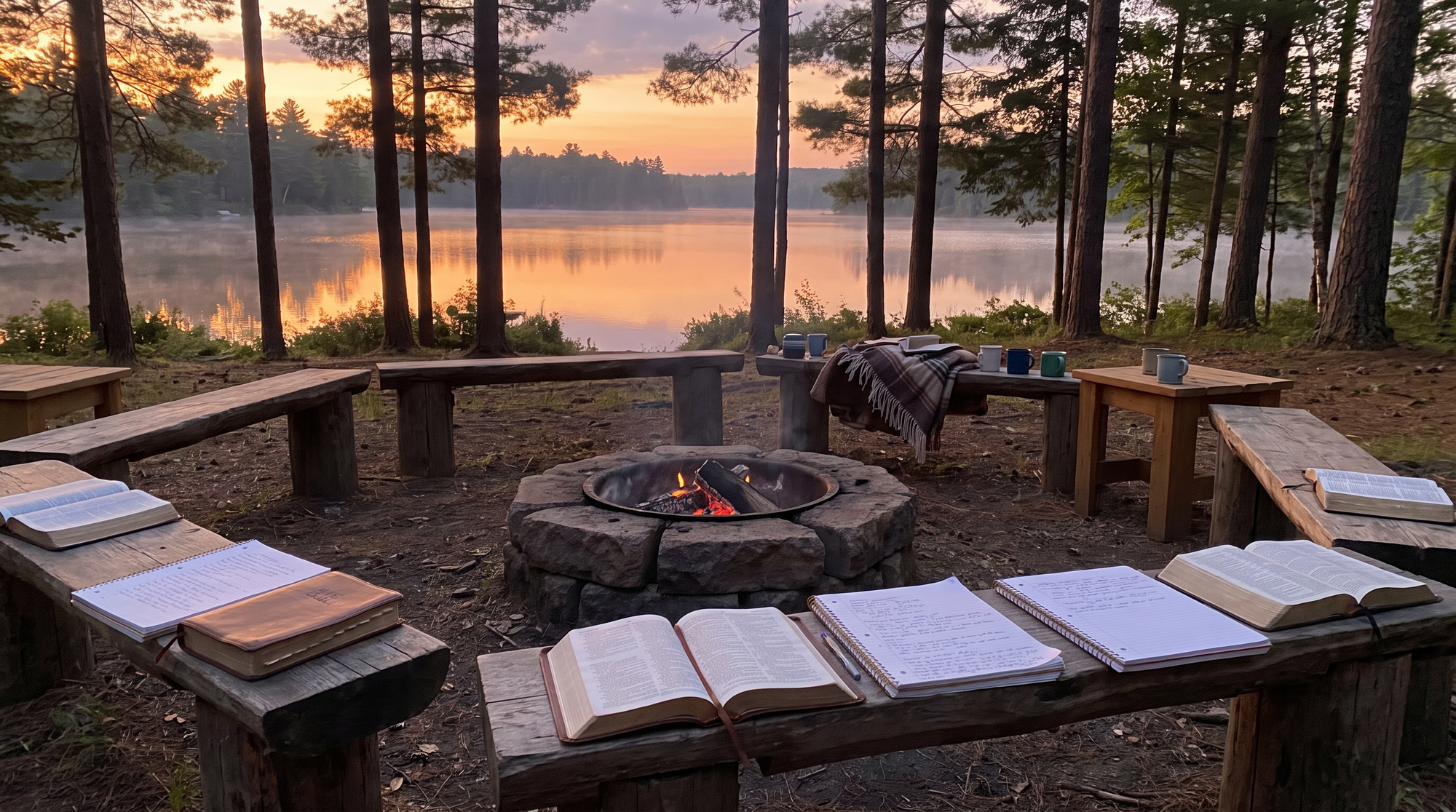
Most church retreats are planned backwards. The venue gets booked, the games get organized, the meals get sorted — and then, a few weeks out, someone asks what the teaching will be. A theme verse gets chosen, printed on the welcome packet, and mentioned in the opening session. By Sunday afternoon everyone is tired and happy, and almost no one can say what the weekend taught them from the Bible.
None of that makes retreats bad. Time away together is genuinely valuable; Jesus Himself drew His disciples aside: "Come away by yourselves into a deserted place, and rest awhile" (Mark 6:31). But a retreat can be more than rest and fun. Planned deliberately, it can be the most concentrated season of Scripture engagement your church experiences all year — three days of sustained attention that a Sunday-morning schedule can never offer. Here is how to plan a retreat where Scripture shapes the whole weekend, not just the banner.
Start With a Text, Not a Theme
The single biggest shift is this: choose a passage before you choose a theme. Themes like "Renewal" or "Anchored" are fine, but when the theme comes first, Scripture gets recruited afterward to decorate it — a verse here, a verse there, each pulled from its context to serve the slogan.
Reverse the order. Pick one book, or one substantial section of a book, and let the weekend live inside it. A retreat is long enough to walk through Philippians in four sessions, or Psalm 23 phrase by phrase, or the "I am" statements of John. When every session, small group, and quiet time sits inside the same text, the weekend accumulates depth instead of scattering attention. People go home having actually inhabited a book of the Bible — and they can keep reading it when they get there.
Build the Weekend Around Four Movements
A simple, proven structure for a Friday-to-Sunday retreat is four teaching sessions, each followed by small group discussion and unhurried personal time. If your text is Mark 6:30–44, for example — the passage where retreat itself begins — the movements might look like this:
Session one: the invitation (Mark 6:30–32). The apostles return from ministry so busy they cannot eat, and Jesus' response is not another assignment but an invitation to rest. Open the weekend by letting people actually hear that invitation addressed to them.
Session two: the interruption (Mark 6:33–34). The crowds follow, the quiet is broken, and Jesus responds not with frustration but compassion. A session on what it means that our rest and our callings interrupt each other — honest ground for most adults.
Session three: the provision (Mark 6:35–44). Five loaves, two fish, and a God who feeds the multitude with them. Teach on dependence: what the disciples' "not enough" becomes in Jesus' hands.
Session four: sending (drawing the threads together). Close by returning to the rhythm of the passage — drawn aside, fed, sent back. Sunday's session should aim everyone at Monday.
Between sessions, resist the urge to fill every hour. The schedule should have real margin: long meals, free afternoons, space to walk. The rest is not a break from the retreat's purpose. It is part of it.
Write the Small Group Guides Before the Talks
Here is a planning discipline that changes outcomes: draft the small group discussion guides before the teaching outlines are finished. It forces the planning team to decide what participants should actually wrestle with, rather than what the speaker finds interesting. A good retreat discussion guide has three parts: a re-entry question that brings the passage back ("What did you notice in the text that you had not seen before?"), two or three questions that push into the passage itself, and one application question specific enough to act on before the weekend ends.
This is also where preparation time disappears for most volunteer planning teams — writing four coherent guides that stay faithful to the text is real work. It helps to have tools that carry part of the load: with Gabriel, a retreat planner can move from studying Mark 6 directly into drafting a small group guide built on that passage, shaping discussion questions that stay anchored to the text instead of drifting into generalities. The planning team still makes every judgment call; the tool simply gets a faithful first draft on the table in an evening instead of a month.
Prepare the Leaders, Not Just the Materials
A retreat's small group leaders matter more than its speaker. Gather them two or three weeks before the retreat for a single evening with three aims: walk the whole group through the chosen passage so they have studied it before they lead it; talk through each session's discussion guide and let them adjust the questions for their group; and pray together for the people who will be in the room. Leaders who have lived in the text lead differently than leaders handed a packet on Friday afternoon.
A practical help here is building a shared study plan the whole leader team works through in the weeks beforehand — the same passages, a few readings each week, so everyone arrives at the retreat having already walked the ground. Gabriel's study plans make that easy to set up and share, and leaders can bring the questions their reading raises straight into the leader meeting.
Plan the Quiet Hours With as Much Care as the Sessions
For many attendees, the most significant hour of a retreat is not a session at all — it is the first extended personal time with Scripture they have had in years. Do not leave that hour unstructured. Provide a simple, printed personal reading guide: the weekend's passage, three or four reflective questions, and space to write. Tell people plainly that the hour is for Scripture and prayer, not naps and phones, and give them somewhere beautiful to spend it.
The pattern you are teaching them — unhurried reading, honest questions, written reflection — is one they can take home. Some will want to continue it; point them to a next step before they leave, whether that is a reading plan, a devotional rhythm, or a study tool they can use on their own.
Where the Weekend Should Land
Hear the invitation again, in full:
"He said to them, 'Come away by yourselves into a deserted place, and rest awhile.' For there were many coming and going, and they had no leisure so much as to eat." (Mark 6:31, WEB)
Notice that in Mark's account, the rest is interrupted, the crowds arrive, and the disciples end the day distributing bread they did not bake to a multitude they did not invite. That is the honest shape of Christian rest: we are drawn aside not to escape our callings but to be fed for them. A Scripture-centered retreat should send people home the same way — rested, yes, but more than rested: fed by the Word, and ready to feed others.
If you are planning your church's next retreat and want the Bible at the center of it from the first planning meeting, start a free trial of Gabriel. Study the passage, draft your session outlines and small group guides, and build a weekend where the text — not the theme — does the deepest work.