How to Build a Church-Wide Bible Reading Challenge That Works for Every Age
A practical guide to planning a church-wide Bible reading challenge that families, teens, and adults can finish together, grounded in Deuteronomy 6.
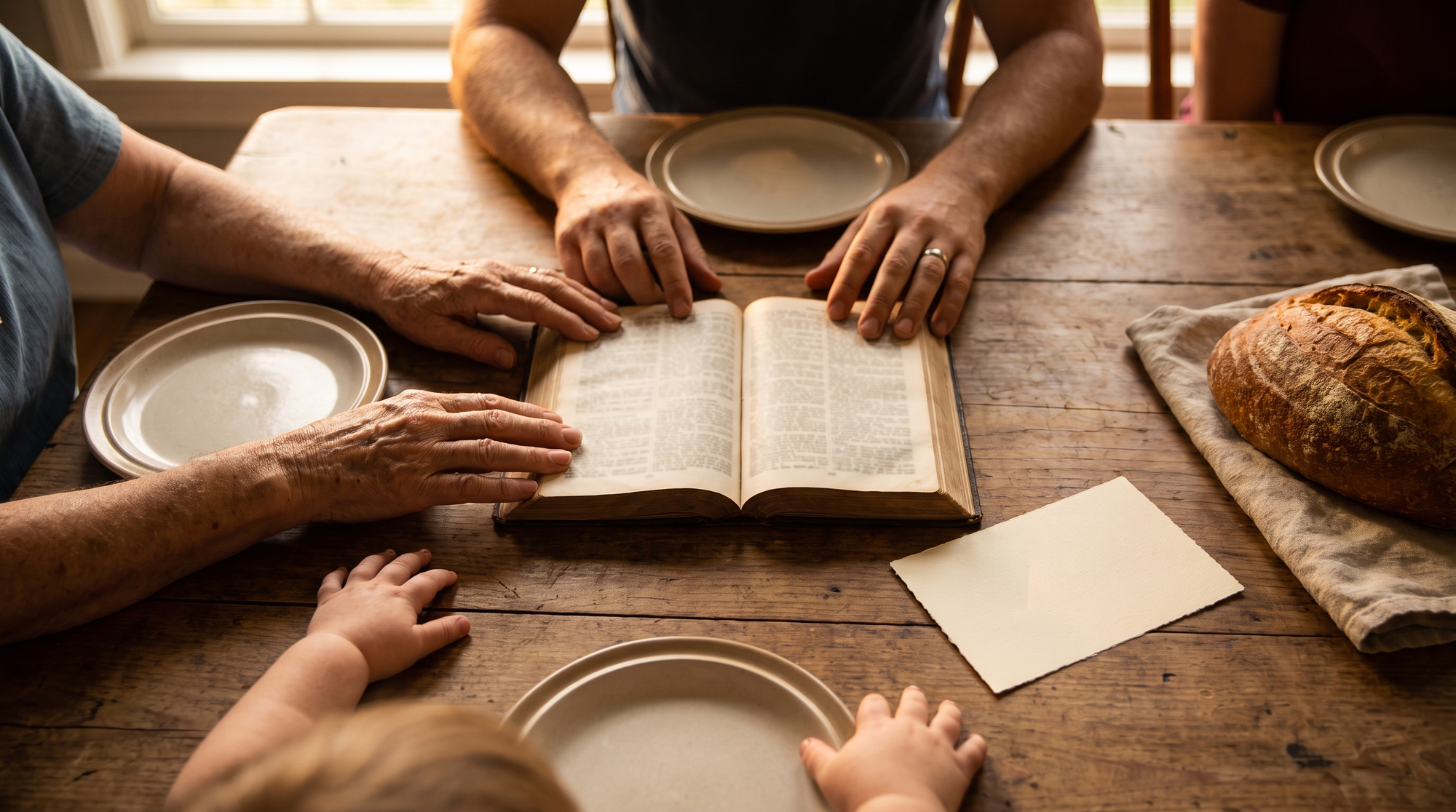
Every pastor has seen it. A church-wide Bible reading plan launches in January with real enthusiasm, and by the second week of February most of the congregation has quietly stopped. The problem is rarely a lack of desire. It is usually a plan that was built for one kind of reader, announced once, and then left to run on its own.
A church-wide reading challenge can be one of the most unifying things a congregation does together. When a grandmother, a middle schooler, a new believer, and a deacon are all in the same chapter on the same day, something happens to the conversations in the hallway. But that only works if the challenge is built for every age from the start. This guide walks through how to do that.
Start With the Reason, Not the Schedule
Before choosing a book or a duration, be clear about why you are doing this. Scripture gives the foundation:
"These words, which I command you today, shall be on your heart; and you shall teach them diligently to your children, and shall talk of them when you sit in your house, and when you walk by the way, and when you lie down, and when you rise up." (Deuteronomy 6:6-7, WEB)
Notice the shape of that command. God's Word is meant to be on the heart of the adult first, then taught to children, then talked about in the ordinary rhythms of a household. A reading challenge is not a program layered on top of church life. It is a way of helping the whole congregation do what Deuteronomy describes: carry the same Word through the same days and talk about it together.
Paul says something similar to the Colossians: "Let the word of Christ dwell in you richly; in all wisdom teaching and admonishing one another" (Colossians 3:16, WEB). The goal is not that everyone finishes a checklist. It is that the Word dwells richly in a community and spills over into how people teach and encourage each other. Keep that goal in front of you, and many of the practical decisions become clearer.
Choose a Scope Everyone Can Actually Finish
The most common mistake is going too big. A whole-Bible-in-a-year challenge is a wonderful thing for an individual with the habit already formed. For a whole congregation that includes children, new believers, and people who have never read more than a few verses at a time, it is a setup for early failure.
A better first challenge is one book, or one clearly bounded section, over four to eight weeks. Good candidates include the Gospel of Mark, which moves quickly and is full of action that children can follow; Philippians or 1 John, which are short enough to read repeatedly; the story of Joseph in Genesis 37 through 50; or a set of Psalms chosen around one theme such as trust or praise.
Aim for a daily reading that takes an adult about ten minutes and can be read aloud to a child in five. Five days a week is better than seven; it builds in grace for missed days without breaking the streak. If people finish and want more, you can always run a second challenge. It is far easier to build on a completed challenge than to recover from an abandoned one.
Build One Plan With Three On-Ramps
The key to a challenge that works for every age is that everyone reads the same passage, but not everyone engages it the same way. Design one core reading schedule, then create three levels of engagement around it.
The family on-ramp. For each day's passage, provide one simple question a parent can ask at the dinner table and one sentence a young child can remember. For Mark 4, that might be: "What did Jesus do when the storm came?" and "Jesus is stronger than the storm." Parents do not need a lesson plan. They need one good question and permission to keep it short.
The personal on-ramp. For teens and adults reading on their own, provide two or three observation questions and one application question per day. Keep them tied to the text. "What does Jesus ask the disciples in verse 40, and why?" is better than "How do you handle fear?"
The group on-ramp. For small groups, Sunday school classes, and youth groups, provide a weekly discussion guide that covers the week's readings together. This is where the deeper questions, cross-references, and doctrinal connections belong.
Writing all of this by hand for a six-week challenge is a significant amount of work, which is one reason many churches never get past the schedule. Having the study plan generator at www.gabrielchurchai.com draft a first version of the daily questions and the weekly group guide from the passages themselves, in your church's theological tradition, turns days of writing into an afternoon of editing. You still shape every question, but you are not starting from a blank page.
Make the Preaching Match the Reading
The single most effective thing you can do for a reading challenge is preach from the same book while the church is reading it. When Sunday's sermon comes from the chapter everyone read on Thursday, people arrive already familiar with the passage. Questions from the week get answered from the pulpit. Children recognize the story. The whole church is having one conversation instead of several.
This does not require perfect alignment. If the church is reading Mark over six weeks, you can preach six sermons from key passages in Mark without covering every chapter. What matters is that the reading and the preaching reinforce each other rather than competing for attention.
If you are building the sermon series and the reading plan at the same time, keeping them in one place helps. On www.gabrielchurchai.com, notes you attach to specific verses during sermon preparation are right there when you come back to write the daily questions for those same verses, so the emphasis of the pulpit and the emphasis of the plan stay consistent.
Plan the Launch Like It Matters
A reading challenge announced in the bulletin will reach the people who already read their Bibles. A challenge launched well can reach the people who do not.
Give the challenge a clear start date and end date, and announce it at least three weeks ahead. Put a physical copy of the reading schedule in every hand: a bookmark, a fridge card, a printed booklet. Physical reminders outperform digital ones for daily habits, especially across generations. Explain the family on-ramp from the pulpit so parents know this is designed for them, not just for serious students. Ask a few people of different ages to share briefly why they are joining. And on launch Sunday, read the first day's passage aloud together in the service so that everyone begins at the same moment.
Keep It Alive Week by Week
Most challenges die from silence. After the launch, nothing more is said, and people assume it has faded. Build in a weekly rhythm that keeps the challenge visible.
Each Sunday, take sixty seconds to mention where the church is in the reading and what is coming this week. Share one short story from someone in the congregation about what they noticed. Post the week's passages in every communication channel the church uses. Give children's ministry a role: a sticker chart, a memory verse from the week's reading, or a moment in the children's service to retell the story. Encourage small groups to open with the question, "What stood out to you in this week's reading?" before anything else.
Also, plan for people who fall behind. Say clearly and often: "If you missed a few days, just start with today's reading." Perfectionism kills more reading plans than laziness does. The goal is for people to be in the Word on the day they open it, not for them to feel guilty about the days they did not.
End Well and Build on It
Mark the end of the challenge as clearly as the beginning. Have a Sunday where you celebrate finishing, invite people to share what God taught them, and, if it fits your tradition, take a moment of thanksgiving together. Then let people know what comes next before the momentum fades.
A church that completes one six-week challenge together has built something: a shared experience of Scripture, families who now have a dinner-table habit, and a set of study materials that can be reused. Save those materials. The next time you run a challenge, or when a new family joins, the daily questions and group guides for Mark are already written. Over a few years, a church can build a small library of reading challenges that new members can pick up and that families can use again as their children grow.
A Simple Six-Week Template
Here is a starting structure using the Gospel of Mark.
Week 1: Mark 1 through 3. Jesus begins. Family question each day: "What did Jesus do today?"
Week 2: Mark 4 through 6. Jesus teaches and shows His power. Family focus: the parables and the storm.
Week 3: Mark 7 through 9. Who is Jesus? Peter's confession and the transfiguration.
Week 4: Mark 10 through 12. On the road to Jerusalem. Family focus: Jesus came to serve.
Week 5: Mark 13 through 14. The last week begins. Handle these chapters gently with younger children, focusing on the Last Supper and Jesus praying.
Week 6: Mark 15 through 16. The cross and the empty tomb. End the challenge on resurrection.
Adapt the pace to your congregation. Two chapters a week with more repetition may serve a church with many young families better than three.
What You Are Really Building
A church-wide reading challenge is not finally about a plan or a book. It is about a congregation learning to talk about Scripture "when you sit in your house, and when you walk by the way." When it works, the fruit shows up months later: a child who remembers the story, a new believer who now knows how to read a Gospel, a small group that opens with the Word by habit, and a church that has one more shared story in its life together.
If you are ready to build your first challenge, you can start a free trial at www.gabrielchurchai.com, choose your book, and draft the daily questions and group guides your church will read together this fall.